Glazed Flat Plate Collectors
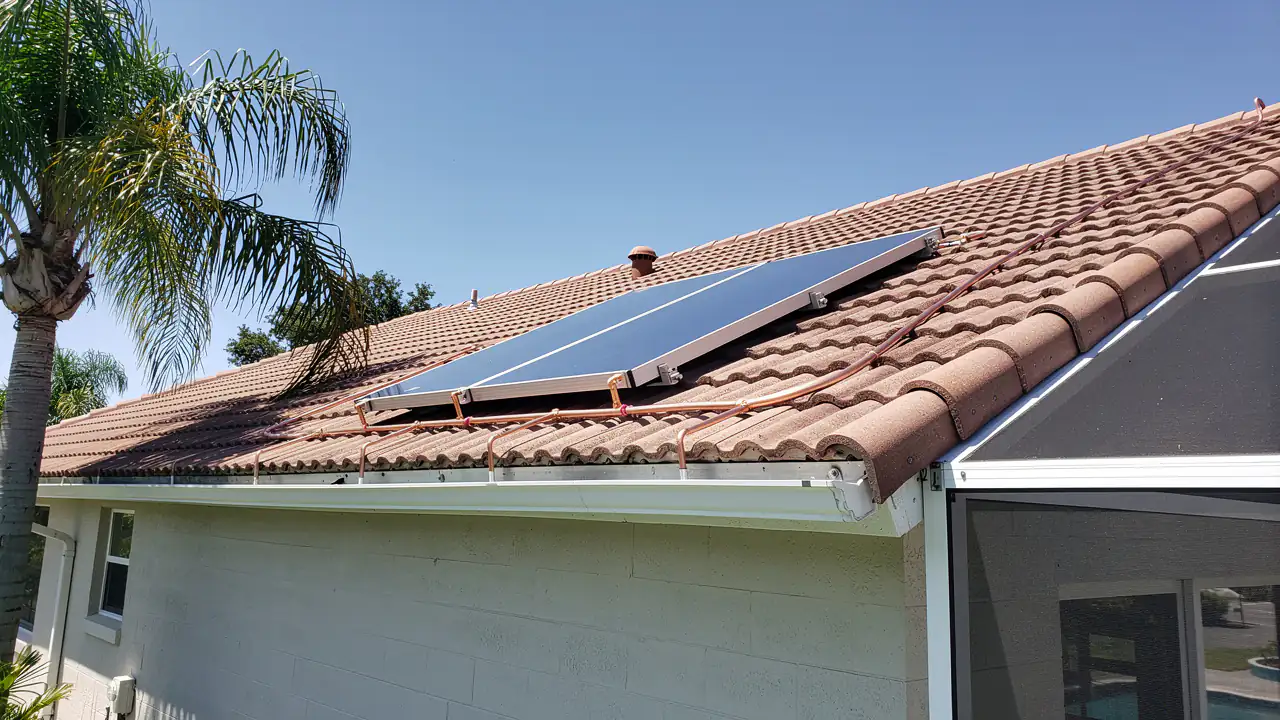
We mount SunEarth flat plate collectors with tempered glass covers, mainly from the Empire and ThermoRay lines. Each one is SRCC OG-100 certified and strapped to the roof structure with stainless hardware.
Solar hot water since 2010
Cape Coral Solar Water Heater Pros designs and installs solar water heaters for homes across Cape Coral and the rest of Lee and Charlotte County. A typical system pairs one or two glazed flat plate collectors on your roof with an 80 or 120 gallon solar storage tank in the garage, a small circulating pump, a differential controller and an electric backup element for the cloudiest days.
We have heated Southwest Florida water with the sun since 2010, and solar hot water is a core service for us, not an add-on to solar electric panels. That focus means we know the failure points that show up 10 years after a system goes in, and we design around them.
Already own a system that is not keeping up? Our solar water heater repair service is the better starting point.
What is included
Every solar water heater we install arrives as a complete, permitted system: collectors, storage tank, pump, controls, valves and the paperwork. It suits households that use plenty of hot water and have a roof face in sun from late morning to late afternoon.
We mount SunEarth flat plate collectors with tempered glass covers, mainly from the Empire and ThermoRay lines. Each one is SRCC OG-100 certified and strapped to the roof structure with stainless hardware.
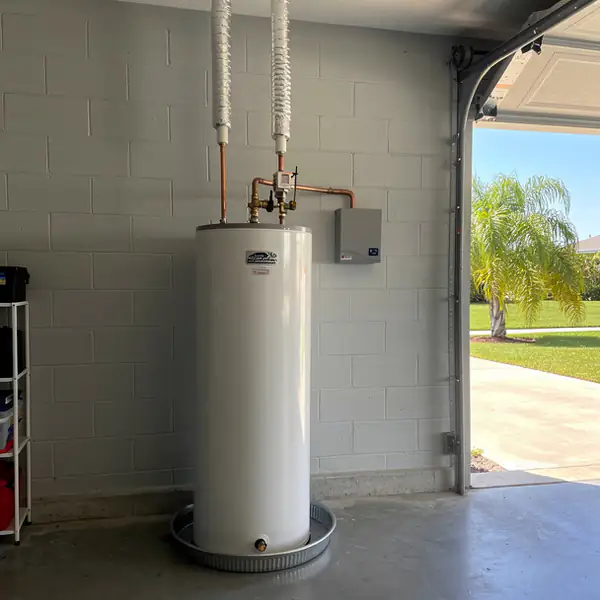
Your solar heat is stored in an 80 or 120 gallon Rheem Solaraide or SunEarth tank, usually in the garage where your old water heater stood. A built-in electric element tops up the tank only when the sun falls short.
A differential controller compares the collector and tank temperatures and runs the circulating pump only when the roof is hotter than the tank. A thermostatic mixing valve blends the outgoing water down to a safe temperature at your taps.
We pull the permit, schedule the inspections and stay until the system passes. Before we leave, you get a walkthrough of the controller, the backup element timer and the valves you might need in a storm.
The hidden cost
Water heating is often 14 to 18% of a Southwest Florida home's electric bill, and a standard electric tank heats every gallon with resistance elements around the clock.
A correctly sized solar water heater typically covers 60 to 80% of that hot water load here. ENERGY STAR's solar water heater guidance describes savings on the same scale nationally, and Florida's sun puts most local homes toward the strong end.
Cape Coral homes buy power from LCEC, and LCEC offers no solar water heater rebate. Fort Myers homes on FPL are in the same position, so every dollar saved comes from the system itself rather than a utility check.
Choose a system
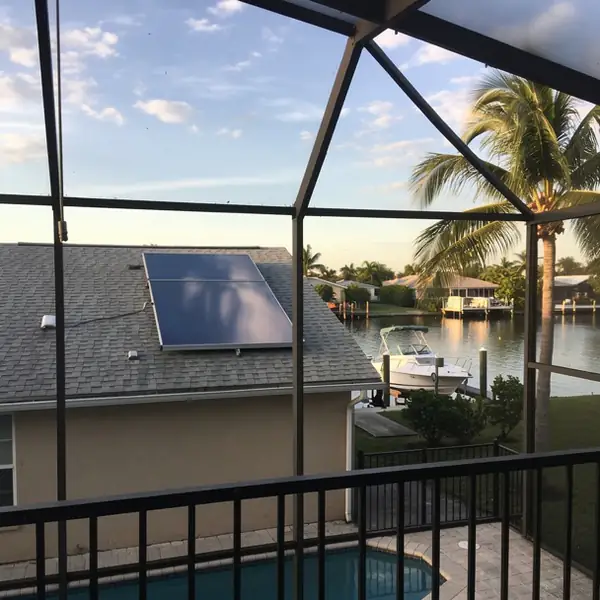
Solar water heaters fall into four families: active direct, active closed loop or drainback, passive thermosiphon and batch, and PV-powered pump systems. Most new installs we do in Cape Coral are active closed loop or active direct systems, with PV-powered pumps as an option on either.
The right choice depends on freeze risk, water quality and roof structure. Our guide on how solar water heaters work explains the heat transfer behind each one.
A pump sends your household water straight up to the collector and back to the tank, which makes this the simplest, lowest-cost active design. Potable water sits on the roof, so it needs freeze protection on rare cold nights and suits treated city water better than iron-heavy well water.
A closed loop circulates food-grade propylene glycol through the collector and hands its heat to your water through a heat exchanger in the tank, so house water never touches the roof. Drainback systems such as the SunEarth Cascade use plain water that drains to a reservoir when the pump stops.
Glycol needs a periodic test and flush, which our solar water heater maintenance service covers.
Passive systems have no pump: a thermosiphon puts the tank on the roof above the collector, and an integral collector storage (ICS) or batch heater combines both in one box. Each puts several hundred pounds of water on the roof, and batch heaters lose much of their heat overnight, so we service them but rarely install them here.
A small photovoltaic module beside the collector runs a DC circulating pump that speeds up as the sun gets stronger. Because the pump has its own panel, solar heating keeps working through a post-storm power outage, even though the backup element still needs the grid.
| System | Freeze protection | Relative cost | Maintenance | Best for |
|---|---|---|---|---|
| Active direct (open loop) | Freeze valve or controller recirculation | Lowest of the active systems | Low; scale checks on hard water | City water homes with simple roof runs |
| Active closed loop (glycol) | Propylene glycol in the loop | Moderate | Glycol test and periodic flush | Most homes, well water, long roof runs |
| Drainback | Loop drains when the pump stops | Moderate | Low, but pump and pitch must be right | Owners who want no glycol |
| Thermosiphon or batch (ICS) | Limited; relies on mass and mild winters | Low to moderate | Low, but heavy roof load | Small loads on strong roofs |
| PV-powered pump (any active type) | Same as the loop it drives | Slightly higher | Low; no AC controller | Homes that want solar heat during outages |
Equipment
Three equipment decisions shape how well a solar water heater performs: the collector type, the tank size and whether the whole system carries OG-300 certification. We make a recommendation on each one in your written quote and explain why.
We install glazed flat plate collectors and do not put evacuated tubes on Southwest Florida roofs. Flat plates handle wind, salt air and our mild winters better and cost less, while evacuated tubes earn their vacuum insulation only in cold, cloudy climates.
Most households of 2 to 4 people are well served by an 80 gallon tank and one collector. Families of 4 to 6, or homes with a large tub or frequent guests, usually need a 120 gallon tank and two collectors.
Too small a tank runs out of solar heat by evening; too big a tank never gets fully hot. We size by people, fixtures and habits, not the old tank's label.
SRCC OG-100 certifies a collector, while OG-300 certifies a complete solar water heating system, including the tank, controls and piping design, so you know the parts were rated to work together.
Florida Statute 377.705 sets the certification rules for solar systems sold in Florida. FSEC no longer tests solar thermal equipment and now accepts SRCC or IAPMO certification, and you can look up any rating in the SRCC certified product directory.
| Household | Tank size | Collectors | Typical fit |
|---|---|---|---|
| 1 to 2 people | 80 gallon | 1 | Condos, villas and retired couples |
| 2 to 4 people | 80 gallon | 1 | Most single-family homes with standard fixtures |
| 4 to 6 people | 120 gallon | 2 | Larger families, big tubs, frequent guests |
| 6 or more, or a rental | 120 gallon, reviewed on site | 2 or more | Heavy daily use; we check roof space first |
Start to finish
Most installations go from first visit to hot water in about 2 to 3 weeks, and almost all of that is permit time. The install itself takes 1 day.
We count people and fixtures, look at your current water heater and check the roof for orientation, shade and age. A roof due for replacement soon should be done before collectors go on, and your written quote follows the same day or the next.
We draw up the system and apply for the permit. In Cape Coral that goes through the city's EnerGov citizen portal and typically takes 1 to 2 weeks.
Addresses in unincorporated Fort Myers and Lehigh Acres go through Lee County DCD instead. We book your install date as soon as the permit is issued.
We mount the collectors, run insulated copper lines, set the tank, wire the controller and fill and purge the loop. Then we set the controller differential and backup element timer, show you vacation mode and schedule the final inspection.
Pricing
A complete solar water heater installed in Cape Coral costs $6,800 to $8,900 with an 80 gallon tank and one collector, or $8,900 to $11,500 with a 120 gallon tank and two collectors. Those 2026 prices include the permit, the tank, the collectors, the controls and our labor.
Price moves with roof type, the distance from the roof to the tank, whether the old heater sits in a garage or an interior closet, and the system type you choose.
| System | Typical household | Installed price |
|---|---|---|
| 80 gallon tank, 1 collector | 2 to 4 people | $6,800 to $8,900 |
| 120 gallon tank, 2 collectors | 4 to 6 people | $8,900 to $11,500 |
The federal 25D Residential Clean Energy Credit ended for systems installed after December 31, 2025, so be wary of any quote that still promises 30% back. Two state benefits remain: solar equipment is exempt from Florida sales tax, and Florida Statute 193.624 keeps the added value of a solar water heater off your property tax assessment.
Payback depends on how much hot water your household uses and what you pay per kWh, so larger families recover the cost fastest. The solar water heater cost guide walks through the math and compares quotes, and our Florida solar incentives guide explains each tax rule.
Honest comparison
Choose solar if you want the lowest running cost over 20 years and have a sunny roof; choose a heat pump water heater if your roof is shaded or you want a lower upfront price. Both cut water heating costs well below a standard electric tank.
A heat pump water heater pulls heat from the surrounding air with a compressor, so it uses electricity every day and cools the space it sits in.
We specialize in solar thermal, so we will tell you plainly if your roof makes solar a poor bet.
FAQ
These are the questions Cape Coral homeowners ask most before they commit to solar hot water.
Yes. The electric backup element in the solar tank heats the water whenever the sun falls short, so you never run cold.
We schedule that element to run mainly in the late afternoon and evening, so the collectors get first chance at the tank each morning.
Sometimes, but usually as a second tank rather than the solar tank itself. A standard electric heater has no heat exchanger or solar ports, so it cannot take collector piping directly.
A young electric tank can stay downstream of a new solar tank as a finishing heater, but that adds standby heat loss. For most homes, one solar tank with its own backup element is cleaner.
It is worth considering. Water heating is often 14 to 18% of a home's electric bill, and a solar water heater handles most of that load directly from the roof.
Taking that load off first may let a future PV system be sized for a smaller electric demand. We do not sell PV, so ask your solar electric installer to run the numbers both ways.
Set the backup element to vacation or off, but leave the solar controller and pump powered. A closed loop system that stops circulating in July sun can overheat its glycol and shorten its life.
Many controllers have a vacation setting that cools the tank by running the pump at night. Ask us for a pre-season check in October or November when you return.
Yes. Florida's Solar Rights Act, Statute 163.04, lets an HOA set placement only within 45 degrees of due south and only if it does not impair performance. We prepare the drawings and data sheets most architectural review boards ask for.
Free estimate
Tell us how many people live in the home and where your water heater sits, and we will book a free on-site estimate, usually within the week. You get a written quote with the tank size, collector count and system type the same day or the next.