info@capecoralsolarwaterheaters.comServing Cape Coral and Southwest Florida since 2010

Mon to Sat 6:00am to 9:00pm, Sun 9:00am to 9:00pm

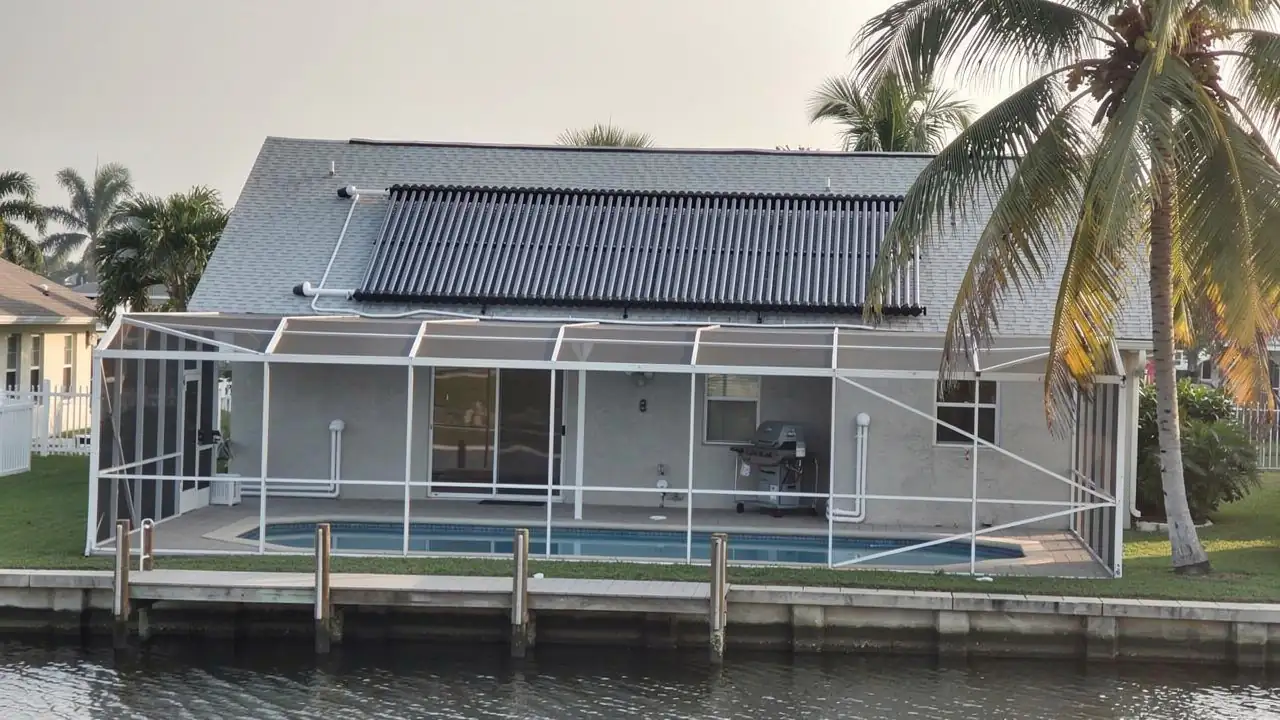
Solar pool panels above screened canal pool

Solar pool heater troubleshooting

Solar Pool Heater Not Working? Common Causes and Fixes for Florida Pools

When a solar pool heater stops warming the pool, the cause is usually simple: a controller set too low, a valve that did not turn, or a dirty filter starving the panels of flow. Cape Coral Solar Water Heater Pros has repaired solar pool heaters on Southwest Florida roofs since 2010, on every brand from Heliocol and Aquatherm to FAFCO systems that lost factory support when that company closed in late 2024.

This guide walks through each symptom in the order we check it on a service call, starting with tests you can do safely from the pool deck. It is written for owners from Cape Coral to Port Charlotte, and each cause ends where a ladder, a multimeter or a roof walk makes it a technician job.

Start here

Quick Checks You Can Do Yourself

Start with six checks from the ground; they clear up many no-heat complaints before a technician is needed. None of them needs tools, a ladder or opening any electrical box.

  • Is the pump running in the middle of the day? Solar heats only while the filter pump runs, so the timer or variable-speed program should cover roughly 10 a.m. to 4 p.m., when the panels collect the most heat.
  • What mode is the controller in? It should be on Auto (or Solar On), not Off or a manual off setting.
  • What is the set temperature? If the setpoint is 82 degrees F and the pool is already 82, the system is doing its job by staying off.
  • Is the filter clean? A pressure gauge reading 8 to 10 psi above its clean baseline means the filter needs cleaning or backwashing.
  • Is the pool level right? Water should sit about halfway up the skimmer opening; a low level pulls air into the pump and the panels.
  • Is warm water coming back? With solar on during a sunny afternoon, the return jets should feel slightly warmer than the pool.

If all six look right and the pool still runs cold on sunny days, work through the causes below.

8 causes

Common Reasons a Solar Pool Heater Stops Heating

These are the eight causes we find most often on Southwest Florida service calls. Each one lists a quick test you can do and the point where it needs a technician.

Controller Off or Set Too Low

Differential controllers such as the Pentair SolarTouch and Hayward GL-235 turn solar on only when the roof is warmer than the pool and the pool is below its setpoint. A mode switch left on Off after a storm, or a setpoint lowered in summer and never raised, stops all heating.

  • Quick test: set the mode to Auto, raise the setpoint a few degrees above the pool temperature and watch for the valve to turn within several minutes on a sunny day.
  • Call a pro if: the controller is dark, has no power, or calls for solar and nothing happens.

Failed Roof or Pool Temperature Sensor

The controller makes every decision from two sensors: one on the roof beside the panels and one in the pool plumbing. A roof sensor reading falsely cold means solar never starts, while one reading falsely warm can run the system at night and cool the pool.

  • Quick test: if your controller or automation panel shows temperatures, compare its pool reading with a floating thermometer; otherwise note whether solar runs at odd times.
  • Call a pro if: readings are off or erratic. A technician tests the sensor and its roof wiring; controller or sensor replacement runs $350 to $700.

Stuck Diverter Valve or Dead Actuator

A motorized three-way diverter valve sends filtered water either up to the roof or straight back to the pool. Its actuator is a small 24 volt motor that wears out, loses a wire or gets its selector switch bumped.

  • Quick test: when solar is called for, listen for a hum at the valve and watch the handle rotate. If the side switch on the actuator was knocked to Off, set it back.
  • Call a pro if: the actuator hums but the valve will not move, or stays silent with power on. A new actuator costs $325 to $550 installed.

Low Flow From a Dirty Filter or Slow Pump Speed

Solar panels need about 4 GPM of flow per collector, so a 10 panel system wants around 40 GPM pushed up onto the roof. A dirty filter, a clogged pump basket or a variable-speed pump on a low energy-saving speed may never fill the panels.

  • Quick test: clean the filter and baskets, then program a higher pump speed for a solar window from late morning to mid-afternoon.
  • Call a pro if: flow stays weak with a clean filter, or the pump and controller need setting up to work together.

Leaking Panels or Headers

Polypropylene panels develop pinhole leaks with age, rodent bites and storm debris, and the header joints at each end can split. A leak lets water out on the roof and air into the loop, which cuts both flow and heat.

  • Quick test: from the ground, look for wet streaks or staining below the panels while solar runs, and notice if you top off the pool more than usual.
  • Call a pro if: you see water on the roof. Our solar pool heater repair service fixes leaks for $185 to $350 each and replaces panels for $450 to $750.

New Shade From Trees or a Pool Cage

A system that heated well for years can fade as palms, oaks or a neighbor's second story start shading the roof at midday. A new screen enclosure also shades the water, so the panels have more to make up.

  • Quick test: on a sunny day between 10 and 3, step back and look for shadows crossing the panels.
  • Call a pro if: the shade is permanent; moving panels to another roof face or adding panels can restore the heat.

Short Winter Days and Cold Fronts

Some winter heat loss is normal rather than a fault. After a cold front, a few nights in the 40s or 50s with north wind and clouds can pull a pool down faster than short December days can replace it.

  • Quick test: if solar runs and the returns feel warmer on clear afternoons, the system is working within its limits. A blanket at night holds far more of the 8 to 15 degree F gain.
  • Call a pro if: the pool stays cold on clear, calm days. For guaranteed heat in a cold week, compare backup options in our solar vs heat pump pool heater guide.

A System Too Small for the Pool

Collector area should equal 50 to 100% of the pool's surface area, and the DOE guidance on solar pool heaters points to about 100% for year-round swimming in Florida. Many older systems were sized near the low end, which feels fine in April and disappointing in January.

  • Quick test: multiply pool length by width. A 15 by 30 foot pool is 450 square feet, which calls for about 9 to 10 panels of 4 by 12 feet.
  • Call a pro if: your panels cover well under half the surface. Adding collectors is often possible through our solar pool heater installation service.

Odd behavior

Other Symptoms: Pool Too Hot, Noises and Fault Lights

Not every solar complaint is about a cold pool. These four symptoms show up mostly in summer or right after the system switches on or off.

Pool Too Hot in Summer

From June to September a Cape Coral pool can reach the low 90s with no help at all, and solar pushes it higher. Lower the setpoint or switch solar to Off until fall; some controllers also offer a night cooling setting that runs pool water through the panels after dark to shed heat.

Banging When the Valve Switches

A knock when solar turns on or off usually comes from water slamming against a check valve or from air trapped in the roof lines. An occasional thump is harmless, but repeated hammering strains fittings and is worth a service visit.

Controller Fault or Flashing Light

Most solar controllers signal a sensor problem with a flashing light or fault indicator, and the meaning varies by model, so check the label inside the cover or the manual. Sensor faults usually point to an open or shorted sensor wire rather than a dead controller.

Gurgling After the Pump Stops

Gurgling or a short hiss from the roof a minute after solar shuts off is normal. It is the vacuum relief valve letting air in so the panels drain back to the pool, the same action that protects them in a freeze.

Cold snaps

Freeze Protection and Cold-Weather Shutdown

Solar pool panels get through Southwest Florida cold snaps by draining empty whenever the pump stops, provided the plumbing slopes correctly and the vacuum relief valve (VRV) works. Automatic controllers add a freeze-protection mode for extra margin.

  • Freeze-protection mode: when the roof sensor nears freezing, the controller sends pool water through the panels so they never sit full and still. It works only while the pump has power and runs.
  • Drain-down: when solar shuts off, the diverter sends water straight back to the pool and the VRV lets air in so the panels empty.
  • Before a hard freeze: if several hours below freezing are forecast, either confirm freeze protection is on and the pump will run, or switch solar to Off so the panels stay drained.
  • Seasonal owners: before leaving in spring, set the controller to Auto with a sensible setpoint or turn solar off, and book a pre-season check for October or November.

Hard freezes are rare here, with notable ones in January 2010 and late December 2022. The more common cold-weather damage is a cracked header from water trapped by a VRV that stuck shut, and that valve costs $95 to $185 to replace.
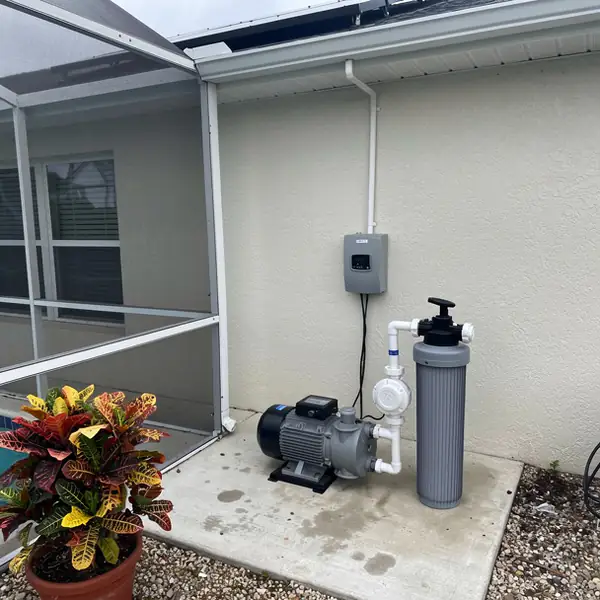
Solar pool controller on lanai wall

Leak response

How to Safely Shut Down a Leaking System

If water is spraying or streaming off the roof, switch the solar loop off and keep the pool filtering normally. These five steps stop most leaks within minutes without anyone climbing a ladder.

  1. Switch Solar Off at the Controller

    Set the controller mode to Off, or turn a manual diverter valve to the pool-only bypass position. Water stops going up to the roof and the panels start draining back.

  2. Let the Panels Drain

    Give it 5 to 10 minutes; you will hear gurgling as the VRV lets air in. The leak should slow to a drip and then stop.

  3. Close the Solar Isolation Valves

    Many systems have a ball valve on the line to the roof, and some have one on the return. Close them only after the panels drain, and leave them alone if you are not sure which valves they are.

  4. Stay Off the Roof and Take Photos

    Concrete tile cracks underfoot and wet panels are slippery, so look from the ground. Photos of where water ran, with the date you noticed it, help us find the leak and support an insurance claim after a storm.

  5. Keep the Pool Running and Call

    The pump and filter can keep running normally with solar bypassed. Request a repair visit; Cape Coral visits are usually within 1 to 2 business days, and hard leaks go to the front of the line.

DIY or pro

When to Call a Solar Technician

Call a technician when the fix needs a ladder, a meter or any work on the roof, or when the homeowner checks changed nothing. A safe rule: your checks stop at the pool deck and the equipment pad.

What a homeowner can safely check and what needs a technician
Safe to check yourselfCall a technician
Controller mode and setpointDark controller, no power or repeated fault lights
Pump timer and variable-speed solar windowValve hums but will not turn, or the actuator is silent
Filter pressure, skimmer and pump basketWater on the roof, wet ceilings or stains near the panels
Pool water levelPanels that stay full after shutdown (a failed VRV)
Shade, viewed from the groundMoving panels or adding collectors
Warmth at the return jetsSensor tests, wiring repairs and any roof work

A repair diagnostic visit costs $149 and is credited to the repair if you approve it during the visit, and the parts we replace carry a 1 year parts and labor warranty. Owners who would rather not troubleshoot every season can book a $169 annual inspection through our solar maintenance and storm inspection service.

Questions

Troubleshooting FAQs

These are the troubleshooting questions pool owners ask us most.

Why does my solar run water to the roof at night?

Either a night cooling setting is switched on or a sensor is failing. If cooling is off and solar still runs after dark, the roof sensor is probably reading falsely warm and needs testing, because every night it runs, it pulls heat out of the pool.

Why do I see bubbles when the solar is running?

A burst of bubbles from the returns for a minute or two after solar starts is normal, as water pushes air out of the panels. Constant bubbles mean air is getting in through a low pool level, a loose pump lid, a leaking suction fitting or a vacuum relief valve that sticks open.

Should I take my panels off before a hurricane?

No. Removing panels in a rush is unsafe, and properly strapped panels rarely leave the roof; switch solar off and leave them mounted. Do not run the system after the storm until it has been checked, as our hurricane-ready solar heating guide explains.

Can you repair a FAFCO or other orphaned system?

Yes. We repair every brand, including FAFCO and SunSaver systems whose factory support ended in late 2024, and we can plumb in compatible replacement panels where original parts are gone.

Repair visit

Book a Solar Pool Heater Repair Visit

If the quick checks did not bring the heat back, request a repair visit and tell us which symptom you are seeing. We diagnose every brand and give you a written price before any work starts.

  • $149 diagnostic, credited when you approve the repair
  • Cape Coral visits usually within 1 to 2 business days
  • 1 year parts and labor on every part we replace
Based in
Cape Coral, Florida, serving Lee and Charlotte counties
Monday to Saturday
6:00am to 9:00pm
Sunday
9:00am to 9:00pm
Free Estimate