info@capecoralsolarwaterheaters.comServing Cape Coral and Southwest Florida since 2010

Mon to Sat 6:00am to 9:00pm, Sun 9:00am to 9:00pm

Cape Coral solar pool heater installation

Solar pool heating since 2010

Solar Pool Heater Installation in Cape Coral, FL

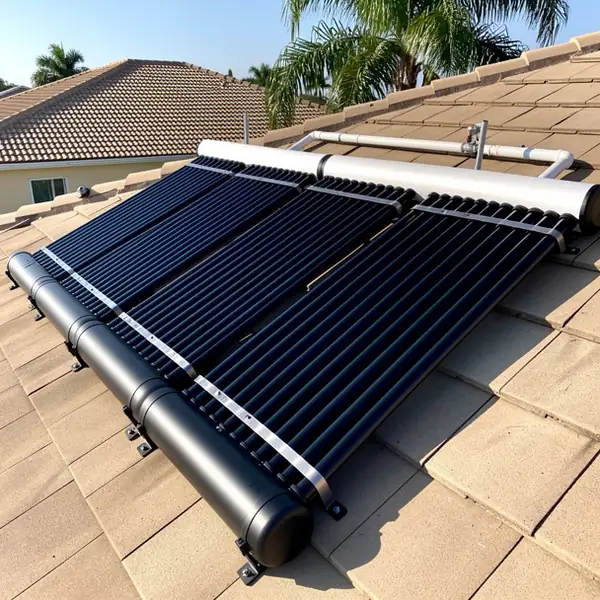
Cape Coral Solar Water Heater Pros designs and installs solar pool heaters for inground pools, screened pools and pool and spa combinations across Cape Coral. A solar pool heating system uses the pump you already run to send pool water through black polypropylene panels on your roof, where the sun warms it before it flows back to the pool.

We opened in 2010, the year a January cold snap left many Southwest Florida pools too cold to swim in for weeks, and 2026 is our 17th season. Solar thermal is all we do: we heat pools and household water with the sun, and we do not sell solar electric panels or batteries.

Every system we install is sized to your pool's surface area, mounted to the design wind speed for your address and permitted through the City of Cape Coral. You get a written quote before any work starts and a 5-year parts and labor warranty on our workmanship when it is done.

What we install

Our Solar Pool Heating Installation Services in Cape Coral

We install complete solar pool heating systems on homes across Cape Coral, from 1970s shingle roofs in the Southeast Cape to newer tile and metal roofs in the Northwest Cape. Every system includes the collectors, plumbing, diverter, check and vacuum relief valves, manual or automatic control, the city permit and the solar final inspection.

New Systems for Inground Pools

Most of our installs heat a concrete or fiberglass inground pool that has never had heat. The array ties into your existing pump and filter, so there is no new circulation equipment to buy.

  • Heliocol or Techno-Solis polypropylene panels

Screened Pool Cages and Lanais

A screened cage shades the water, so a caged pool needs the top of the sizing range. Panels go on the house roof, never on the cage, usually the south or west face above the lanai.

  • Cage frame and screens left untouched

Pool and Spa Combinations

An attached spa can share the array with 1 to 2 extra collectors and a valve setup for pool or spa mode. Spa heating adds $700 to $1,500.

  • Existing spa heater kept as a quick backup

Replacing an Old Solar System

Many 1980s and 1990s homes still carry their first panels, often from a brand with no factory support left. We remove a worn-out array, seal the old penetrations and install a correctly sized system, or price a fix first through our solar pool heater repair service.

  • Old panels and brackets hauled away

The winter problem

Why Unheated Cape Coral Pools Feel Cold From November to March

Unheated pools in Cape Coral usually drop into the mid 60s F in January and February, while most swimmers want 80 to 84 degrees F. Short days, a low sun and cold fronts with dry north winds pull heat out of the water faster than winter sunshine puts it back.

Four Cape Coral conditions make the drop steeper.

  • Screened cages shade the water all day.
  • Canal breezes speed evaporation, which the U.S. Department of Energy names as the largest source of pool heat loss.
  • Clear, cool nights radiate away much of the afternoon gain.
  • Seasonal owners arrive in November, just as water temperatures fall.

A correctly sized solar heater typically keeps the pool 8 to 15 degrees F warmer than an unheated pool on sunny days, and more if you use a solar blanket at night. Our guide on whether solar pool heating is worth it weighs that gain against the cost.

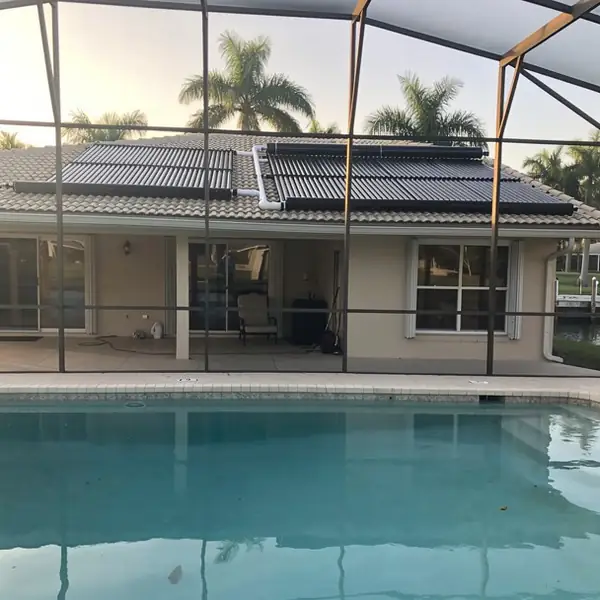
Screened canal pool with rooftop solar panels

How it works

How Solar Pool Heating Works With Your Existing Pump

A solar pool heater uses the pump you already own to push filtered water up to roof collectors, where the sun warms it before it returns to the pool. There is no burner or compressor, and the only running cost is extra pump time, often nothing extra on a variable-speed pump set to run in daylight.

From the Filter to the Roof and Back

After the pump and filter, a three-way diverter valve sends water up a supply line to the bottom header of the panels, through hundreds of small tubes and out the top header to the return line.

  • A check valve stops roof water from flowing back through the filter when the pump stops
  • A vacuum relief valve lets air in so the panels drain down at shutdown, which protects them in a freeze
  • Isolation valves close off the roof loop for service
  • Panels are plumbed in parallel at about 4 GPM each

Automatic Controllers and Temperature Sensors

An automatic controller compares a roof sensor with a pool water sensor and opens the valve only when the roof is warm enough to add heat, so the system never cools your pool on cloudy afternoons or at night.

We install the Pentair SolarTouch and the Hayward Goldline GL-235, which drive a motorized actuator on the diverter valve. Both include freeze protection, and an existing pool automation system can often run the valve with its own solar sensor instead.

Options

Solar Pool Panel and Control Options

The two choices that shape a system are the collector type and the control. We install rigid polypropylene panels only, and the table shows why we prefer them to the rubber mat collectors on some older Cape Coral roofs.

Polypropylene Panels vs Rubber Mat Collectors

Polypropylene panels are rigid, unglazed black collectors with molded headers, strapped to the roof as a unit. Rubber mat collectors use flexible tubing joined with hoses and metal clamps, which tend to rust, stain the roof and leak on saltwater canal lots.

Panel Brands We Install

We install Heliocol and Techno-Solis polypropylene panels, both certified to SRCC OG-100, the national rating for solar collectors.

  • Heliocol: individual-tube panels designed to let wind pass between the tubes, made by Magen Eco-Energy in Ocoee, Florida, 12-year limited warranty
  • Techno-Solis: polypropylene pool collectors, with the maker's written warranty terms attached to your quote
  • Check any collector in the SRCC certified product directory

Manual Valve vs Automatic Solar Control

A manual three-way valve is the lowest-cost control: you turn it to send water to the roof in the cool months and bypass the panels in summer, and water goes up whenever the pump runs, cloudy days included. An automatic controller adds $650 to $950 and makes that call for you all day, which suits seasonal owners and busy families.

Upgrading later is simple, because the valve body stays and only an actuator, two sensors and a controller are added.

Polypropylene panels compared with rubber mat collectors
Rigid polypropylene panelsRubber mat collectors
ConstructionBlack polypropylene tubes molded into rigid headersFlexible rubber tubing joined with hoses and clamps
Roof attachmentStainless straps across each panel, anchored to the deckVaries by maker, often straps or adhesive pads
Wind behaviorStrapped as a rigid unit; individual-tube designs let wind passLoose sections can lift and flutter
Salt airNo metal in the water pathMetal clamps at every joint can rust
RepairsLeaking tubes plugged, single panels swappedHose and clamp joints leak as rubber ages
Typical life15 to 20+ yearsUsually shorter in Florida sun

Sizing

Sizing a Solar Heater for Your Pool

Solar pool heaters are sized by the pool's surface area, not its gallons, because a pool gains and loses heat at the surface. For year-round swimming in Florida, the U.S. Department of Energy puts collector area close to 100% of the pool surface, and screened cages and cool nights push Cape Coral pools to the top of that range.

Typical arrays below use 4 x 12 ft panels, 48 square feet each.

Why Panel Area Follows Pool Surface Area

A 15 by 30 foot pool loses heat across 450 square feet of water whether it is 4 or 8 feet deep, so depth changes how fast it warms, not how many panels it needs. Undersized arrays are a common reason older systems stall in January.

Roof Direction, Pitch and Pool Cage Shade

South and west roof faces collect the most winter sun, and an east face works with extra panels. Florida's Solar Rights Act, Statute 163.04, lets an HOA choose placement only within 45 degrees of due south, and only if that does not impair performance.

Shade matters more than pitch, so we check palms, oaks and two-story neighbors for low winter sun shadow.

Heating a Spa With the Same System

An attached spa draws from the same array with 1 to 2 added collectors. In spa mode the valves send solar-heated water to the spa first, and a gas or electric spa heater can stay for quick evening heat-ups.

Typical solar pool heater sizing by pool size
Pool sizeSurface areaTypical panels (4 x 12 ft)Pump flow neededBest fit
Small, about 12 x 24 ft288 sq ft6 panelsAbout 24 GPMOpen pool, south or west roof
Mid-size, about 15 x 30 ft450 sq ft9 to 10 panels36 to 40 GPMTypical screened canal pool; 10 when caged
Large, about 16 x 36 ft576 sq ft11 to 14 panels44 to 56 GPMUpper count for cages or east roofs
Freeform or kidneyMeasured on siteUsually 11 to 14 panels44 to 56 GPMWe measure the water, not the deck
Attached spaSpa surface1 to 2 extra panels4 to 8 GPM moreHeated from the same array

Roof types

Will Solar Panels Work on My Roof?

Yes, solar pool panels mount on concrete tile, asphalt shingle, standing seam metal, 5V metal and low-slope roofs, each with its own attachment. The bigger question is roof age: if yours needs replacing soon, re-roof first or plan on our solar panel removal and reinstall service later, a common job since Hurricane Ian in 2022.

Tile, Shingle and Metal Roof Mounting

Each roof type gets its own attachment, so the roof keeps shedding water the way it was built to.

  • Concrete tile: tiles lifted or cut at each mount, the mount fastened to the deck, sealed and flashed, then the tile reset
  • Asphalt shingle: mounts flashed under the shingle course, common on older Southeast Cape homes
  • Standing seam metal: seam clamps, so nothing drills through the roof
  • 5V metal: fasteners through the raised rib with sealing washers, never the flat
  • Low-slope lanai roofs: tilted racks so water drains from under the panels

Wind-Load Design and Leak-Free Penetrations

We engineer the mounting to the design wind speed for your address under the Florida Building Code 8th Edition (2023) and its ASCE 7 wind loads, and to the 9th Edition (2026) once it takes effect on December 31, 2026.

Straps, bolts and clamps are 316 stainless steel, because salt air on southern canal lots corrodes plain steel and zinc hardware. Roof penetrations we make carry a 10-year leak warranty, and our hurricane-ready solar heating guide covers storm prep.
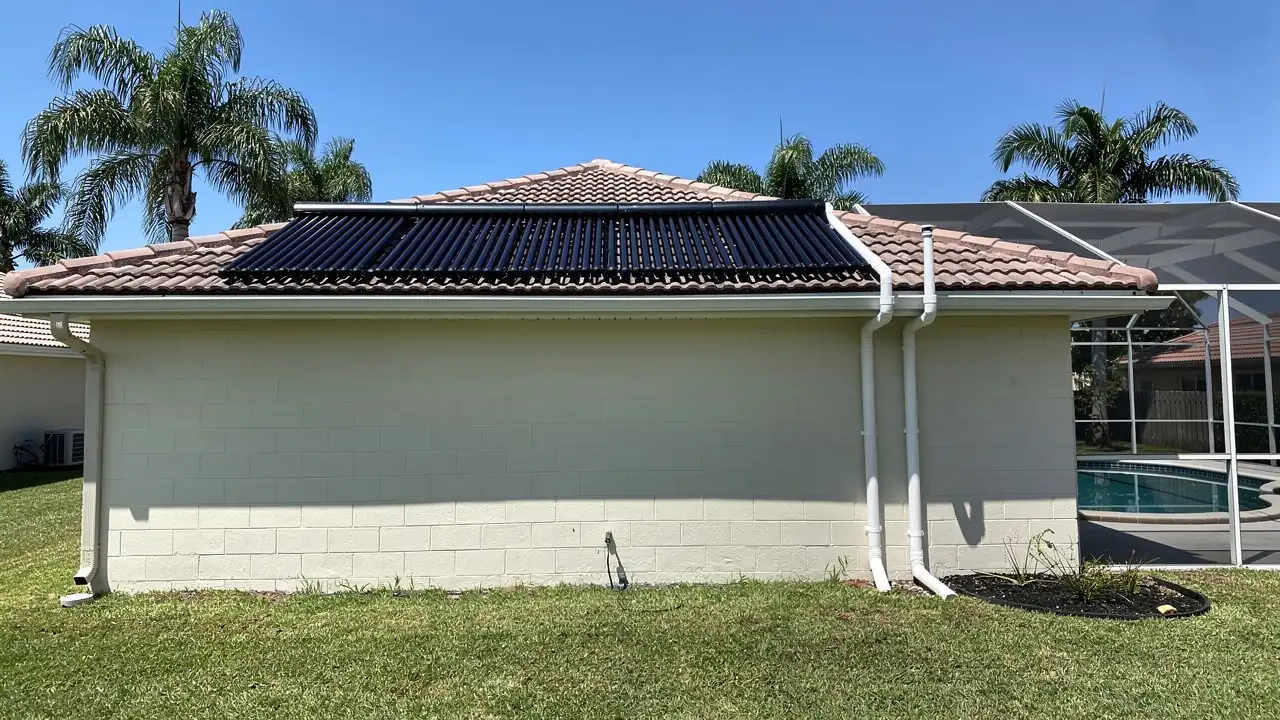
Solar pool panels strapped to tile roof

Our process

Our Solar Pool Heater Installation Process

Permit review is the longest step, typically 1 to 2 weeks in Cape Coral. The work on your roof takes 1 day on most shingle and metal roofs and 1 to 2 days on tile.

  1. Site Visit, Shade Check and Written Quote

    We measure the pool, note the roof type, age and direction, check for shade, and confirm the pump can move about 4 GPM per panel. Estimates are free, usually within the week, with the written quote the same day or next.

  2. Permit, HOA Paperwork and Scheduling

    We pull the permit through the City of Cape Coral's EnerGov portal under the city's Pool Heater (New Solar) residential guideline, which asks for a solar data sheet, a site plan and specifications. If your HOA needs architectural approval, we prepare the panel layout and product sheets for the packet.

  3. Installation Day and the City's Solar Final Inspection

    We mount the panels, run the plumbing, install the valves and controller, and pressure test the loop. Then we schedule the city's solar final and walk you through valve positions, controller settings and freeze protection.

Pricing

Solar Pool Heater Installation Cost in Cape Coral

Most Cape Coral solar pool heaters cost $4,200 to $9,200 installed in 2026, driven mainly by pool size and roof type. A typical mid-size 15 by 30 foot pool with 9 to 10 panels lands between $5,800 and $7,400.

Solar energy equipment is also exempt from Florida sales tax under Florida DOR TIP 19A01-09. Four factors move a quote within each range:

  • Roof type. Tile takes longer to mount than shingle or metal, which is why tile jobs run 1 to 2 days.
  • Height and access. Two-story homes and steep roofs add setup time and safety equipment.
  • Plumbing run. A long run from the pool pad to the array adds pipe and labor.
  • HOA or engineering requirements. These are priced separately when an association or the permit calls for them.
Installed solar pool heater prices in Cape Coral, 2026
SystemTypical poolInstalled price
Small system, 6 panelsAbout 12 x 24 ft$4,200 to $5,600
Mid-size system, 9 to 10 panelsAbout 15 x 30 ft$5,800 to $7,400
Large system, 11 to 14 panelsAbout 16 x 36 ft or freeform$7,400 to $9,200
Automatic controller instead of a manual valveAny sizeAdd $650 to $950
Spa heating with 1 to 2 extra collectorsAttached spaAdd $700 to $1,500

The solar pool heater cost guide breaks down each line item and compares lifetime costs with other heaters. Every figure is confirmed in a written quote before any work starts.

Why us

Why Cape Coral Homeowners Choose Us for Solar Pool Heating

We are solar thermal specialists, not a solar electric company with pool heating on the side, and since 2010 we have installed and repaired pool heaters on every common Cape Coral roof type.

Licensed, Insured and Easy to Verify

We are licensed and insured. In Florida a Certified Solar Contractor (CVC) license covers solar pool heating, and you can check any contractor on the DBPR license verification page before you sign.

SRCC-Certified Collectors

The panels we install carry SRCC certification, which Florida now relies on since FSEC stopped testing solar thermal equipment. Florida Statute 377.705 sets that certification rule.

Written Warranty Terms

5 years parts and labor on our workmanship, 10 years on roof penetrations we make, plus the panel maker's warranty, 12 years limited on Heliocol. Our solar maintenance and storm inspection service checks valves, straps and sensors for $169 a year.

Five Permit Offices, One Crew Schedule

We also install in Fort Myers, North Fort Myers, Lehigh Acres, Bonita Springs and Estero and Punta Gorda and Port Charlotte, and we know what each city or county permit office asks for.

FAQ

Solar Pool Heating FAQs

These are the questions Cape Coral pool owners ask most before they book a solar pool heater installation.

How much warmer will my pool get with solar?

A correctly sized system typically keeps the water 8 to 15 degrees F warmer than an unheated pool on sunny days. A solar blanket at night adds to that; heavy shade or an undersized array reduces it.

Will my current pool pump work with solar panels?

Usually, yes. The pump needs to move about 4 GPM per collector, so a 10-panel system needs roughly 40 GPM, and we check your pump at the estimate; a variable-speed pump gets a higher speed for the daylight solar window.

Can I keep my heat pump as a backup?

Yes, and many owners do: solar carries the pool on sunny days and the heat pump covers cold, cloudy stretches. Our solar vs heat pump pool heater comparison explains the trade-offs, and our pool heat pump installation and repair service handles the backup unit.

How long do solar pool panels last?

Quality polypropylene panels last 15 to 20 years or more on a Southwest Florida roof. Heliocol backs its panels with a 12-year limited manufacturer warranty, and our workmanship carries 5 years parts and labor.

Are there tax breaks for solar pool heaters?

Florida exempts solar energy equipment from sales tax, and that still applies in 2026. The federal 25D Residential Clean Energy Credit never covered pool heating and ended for all systems installed after December 31, 2025, and our Florida solar heating incentives guide covers the property tax question.

Free estimate

Schedule Your Free Solar Pool Heating Estimate

Request a free estimate and we will measure your pool, check your roof and pump, and send a written quote the same day or next. Booking in September or October leaves time for the permit before the first cold front arrives.

  • Array sized to your pool's surface area and roof direction
  • Heliocol or Techno-Solis panels with SRCC certification
  • Permit, HOA packet and solar final inspection handled for you
  • 5-year workmanship and 10-year roof penetration warranties
Based in
Cape Coral, Florida, serving Lee and Charlotte counties
Monday to Saturday
6:00am to 9:00pm
Sunday
9:00am to 9:00pm
Free Estimate