info@capecoralsolarwaterheaters.comServing Cape Coral and Southwest Florida since 2010

Mon to Sat 6:00am to 9:00pm, Sun 9:00am to 9:00pm

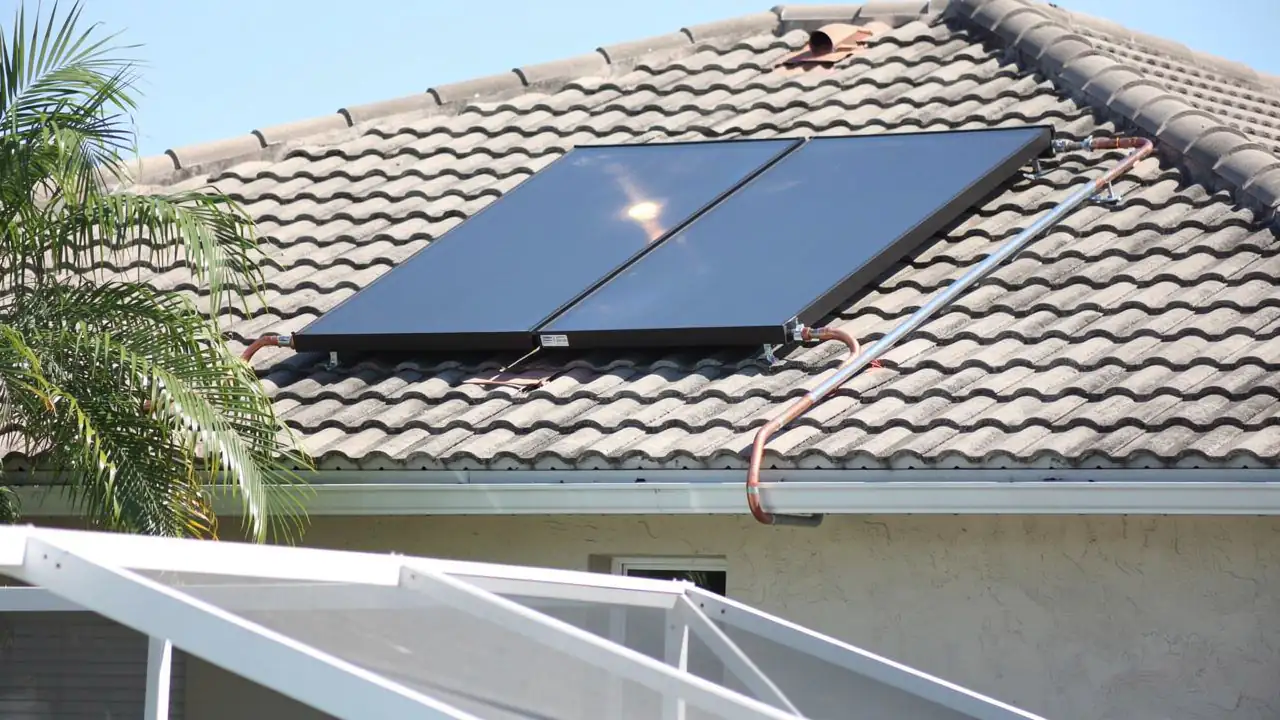
Flat plate collector on Cape Coral roof

Solar water heating explained

How Does a Solar Water Heater Work in a Florida Home?

A solar water heater catches sunlight in a roof collector, turns it into heat and moves that heat into an insulated storage tank, so your showers, laundry and dishwasher draw water the sun has already warmed. Cape Coral Solar Water Heater Pros has installed and repaired these systems across Lee and Charlotte counties since 2010, and this guide explains the hardware the way we explain it at the kitchen table during an estimate.

It covers every design you will hear about: active and passive, direct and closed loop, drainback, thermosiphon and batch heaters, plus flat plate and evacuated tube collectors. It is written for homeowners comparing quotes, buyers who inherited an older system with a house, and anyone curious why the tank stays hot after a sunny afternoon.

We service every brand, including systems whose original installer has closed, so the later sections say plainly which designs work best here and which we rarely recommend.

The hardware

The Main Parts: Collector, Tank, Pump and Controls

Every solar water heater has four working parts: a collector that absorbs sunlight, a tank that stores the heated water, a way to move heat between the two, and controls that decide when it happens. The system types later in this guide differ mainly in how they handle that third job.

The Collector: Where Sunlight Becomes Heat

A glazed flat plate collector is an insulated aluminum box with a dark absorber plate bonded to copper riser tubes under a sheet of tempered glass. Sunlight passes through the glass, the absorber turns it into heat, and the glass and insulation hold that heat until fluid carries it away.

On most Cape Coral homes the collector sits flush on the south or west roof face; SunEarth Empire and ThermoRay are the models we install most.

The Storage Tank: A Thermos for Sun-Heated Water

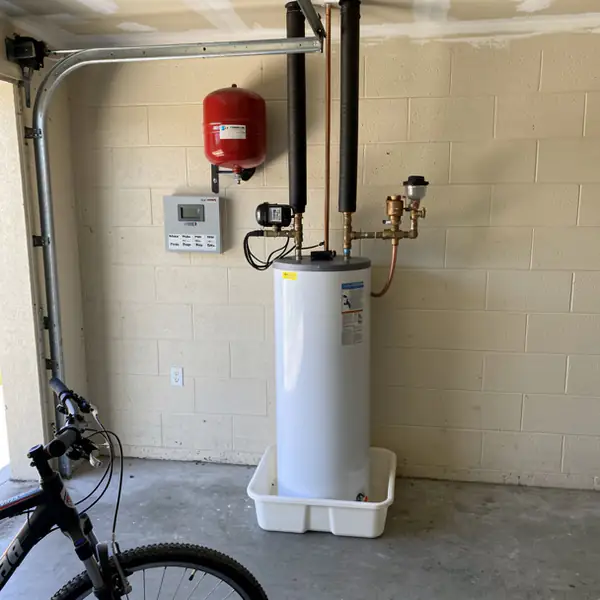
Solar storage tanks hold 80 or 120 gallons, more than a standard electric heater, because the sun delivers heat in one midday burst that has to last through the evening and the next morning. An electric backup element near the top switches on only when the stored water drops below its setpoint.

A thermostatic mixing (tempering) valve on the outlet blends in cold water, since a sunny week can push the tank well past a safe tap temperature.

The Pump and Differential Controller

In an active system a small circulating pump moves fluid between collector and tank. A differential controller reads two sensors, one at the collector outlet and one near the bottom of the tank, and runs the pump only while the collector is several degrees warmer than the tank.

When the collector cools in late afternoon, the controller stops the pump so the loop never pulls heat back out of storage. PV-powered systems skip the controller and run a DC pump straight from a small solar electric module.

The Loop, Heat Exchanger and Safety Valves

Closed loop systems add a heat exchanger, usually a copper coil inside the tank, so collector fluid and drinking water never mix. An expansion tank absorbs the fluid's growth as it heats.

Every system also carries a temperature and pressure relief valve on the tank, a check valve that stops warm water drifting up to a cold collector overnight, and an air vent at the high point of the roof piping.

Closed loop solar tank in garage

Step by step

How Heat Moves From the Roof to Your Shower

On a sunny day, heat moves through a solar water heater in four stages, and the cycle repeats from mid-morning to late afternoon. This is the sequence in an active closed loop system, the design we install most often.

  1. Sunlight Heats the Absorber

    By mid-morning the absorber plate is hotter than the water at the bottom of the tank. With no fluid moving, a flat plate absorber on a clear day here can climb well past 200 degrees F.

  2. The Controller Starts the Pump

    Once the collector sensor reads several degrees above the tank sensor, the controller switches on the circulating pump. Fluid flows up to the roof, picks up heat in the riser tubes and returns through insulated copper lines.

  3. The Heat Exchanger Warms the Tank

    Hot fluid passes through the heat exchanger, warms the water around it and heads back to the roof for more. Because hot water rises, the tank stratifies, with the hottest water at the top where the outlet draws from.

  4. You Draw Hot Water While the Backup Waits

    Opening a tap pulls hot water from the top of the tank through the mixing valve, and cold water refills the bottom for the collector to reheat. The electric element mostly steps in after cloudy spells or heavy use, which is why a solar water heater typically covers 60 to 80% of a household's water heating here.

System types

Active vs Passive Solar Water Heaters

Active systems use a pump and controller to move heat, while passive systems rely on natural circulation or heat the water right where it sits. Active designs dominate Southwest Florida installs because they let a light collector go on the roof while the heavy tank stays in the garage.

Those two families contain five designs, and each one handles freeze protection, weight and upkeep differently.

Direct (Open Loop) Systems

A direct system pumps your household water itself through the collector and back to the tank, with no heat exchanger in between. It is the simplest and most efficient active design, which suits a climate where hard freezes arrive only every few years.

The trade-off is exposure to freezes and minerals. It relies on a freeze valve or recirculation on cold nights, and hard or iron-rich well water can scale the riser tubes over time.

Closed Loop (Indirect) Systems

A closed loop system circulates a propylene glycol and water mix through the collector and a heat exchanger instead of household water. The fluid will not freeze in any cold snap Florida sees, and the collector never meets the minerals in your water.

Glycol breaks down with heat and age and turns acidic, so it is tested at service visits and flushed when it fails. Our solar water heater repair service handles glycol flushes, pumps and controllers on every brand.

Drainback Systems

A drainback system sends water up to the collector only while the pump runs, then lets it all fall back into a small reservoir when the pump stops. An empty collector cannot freeze or overheat, which makes drainback popular in colder states.

Every pipe must slope steadily back to the reservoir, and the pump has to lift water to the roof each morning. SunEarth's Cascade is a known packaged drainback design; we repair these but rarely install them, because our winters do not need that much freeze margin.

Thermosiphon Systems

A thermosiphon system is passive: the tank sits above the collector, usually on the roof, and heated water rises into it on its own with no pump. Fewer moving parts means fewer failures, and it keeps heating during a power outage.

The weak points are weight and wind. An 80 gallon tank holds roughly 670 pounds of water before the tank itself is counted, so roof framing must be checked, and a tank on the roof catches far more wind than a flush collector.

Batch or ICS Heaters

A batch heater, also called an integral collector storage (ICS) system, puts one or more dark tanks inside a glazed, insulated box, so collector and storage are the same thing. Cold water enters, warms in the sun and usually feeds a regular water heater as preheated water.

Batch heaters are cheap and simple, but stored water sitting outdoors loses much of its heat on cool nights. We service older units but seldom recommend a new one.
Collector types

Flat Plate or Evacuated Tube: How the Collectors Differ

Flat plate collectors are the better fit for Southwest Florida, while evacuated tube collectors earn their keep in cold, cloudy climates. Both turn sunlight into heat; the difference is how they stop that heat from escaping.

Flat Plate Collectors

A flat plate solar collector uses a dark absorber plate, copper tubing, rigid insulation and a tempered glass cover in a sealed aluminum frame. It sits low on the roof with a small wind profile, and where winter afternoons often reach the 70s, a vacuum buys very little extra heat for the money.

Evacuated Tube Collectors

An evacuated tube collector is a row of double-walled glass tubes with the air pumped out between the walls, so almost no heat escapes even in freezing air. That is a real advantage in cold, overcast northern climates.

In Florida those tubes can overheat the loop in summer, and each one is a separate piece of glass exposed to windborne debris. We do not install evacuated tubes on Southwest Florida roofs.

Flat plate vs evacuated tube collectors for a Southwest Florida home
FactorGlazed flat plateEvacuated tube
How it holds heatInsulated box under tempered glassVacuum between two glass walls in each tube
Best climateWarm, sunny, mild wintersCold or frequently cloudy
Summer behavior in FloridaSteady output, modest stagnation riskHigher risk of overheating the loop and fluid
Wind and debrisLow profile, one sheet of tempered glassMany exposed tubes and a top manifold
Relative costLower for the same heat delivered hereHigher
Our recommendation hereYes, our standard collectorNo

Our recommendation

Which System Suits a Southwest Florida Home?

For most homes from Cape Coral to Punta Gorda, an active closed loop or active direct system with a flat plate collector and an 80 or 120 gallon tank in the garage is the right choice. Four local conditions decide which of the two fits your house.

Freezes Are Rare but Real

Hard freezes hit Southwest Florida in January 2010 and again in late December 2022, then stayed away for years. A direct system's freeze valve handles most of those nights, while glycol in a closed loop removes the worry entirely.

Wind and Salt Air

A flush flat plate collector with 316 stainless hardware suits canal lots, where salt air eats plain steel. Roof tanks on thermosiphon systems carry far more wind load, so we steer away from them.

Your Water Source

Cape Coral city water is treated by reverse osmosis and is gentle on a direct system. Homes on private wells, common in the north Cape and Lehigh Acres, do better with a closed loop that keeps iron and scale out of the collector.

Power Outages After Storms

A standard system needs grid power for its pump. A PV-powered DC pump system runs whenever the sun shines, so it can keep collecting heat during a post-storm outage, though the electric backup element still needs power.

Tank size follows household size: an 80 gallon tank with one collector suits 2 to 4 people, and a 120 gallon tank with two collectors suits 4 to 6. Our solar water heater installation service covers sizing, permits and the one-day install, and the solar water heater cost guide breaks down installed prices.

If you already own a working system with a failing tank, a solar storage tank replacement keeps the roof collector and costs far less than starting over.

Ratings that matter

Certifications to Look For

Look for SRCC certification: OG-100 on the collector and, ideally, OG-300 on the complete system. Those two listings tell you an independent lab has tested the hardware rather than trusting a sales brochure.

  • OG-100 certifies a single collector's construction, durability and thermal output.
  • OG-300 certifies a complete solar water heating system, collector, tank, pump and controls together, and rates its expected yearly performance.
  • Search any model by name in the SRCC certified product directory, and see how the programs differ on the SRCC OG-100 vs OG-300 explainer.
  • The Florida Solar Energy Center no longer tests solar thermal equipment and now accepts SRCC or IAPMO certification; older FSEC certificates remain valid, as the FSEC solar certification page explains.

Florida law ties equipment sold here to these standards through Florida Statute 377.705, the Solar Energy Standards Act. Every collector and system we install carries SRCC certification.

Questions

Solar Water Heater Basics FAQs

These are the questions homeowners ask most once they understand the basic design.

Why not heat water with solar PV panels instead?

A glazed solar thermal collector turns roughly half or more of the sunlight hitting it into usable heat, while a PV module converts about a fifth into electricity. For the single job of heating water, a thermal collector does far more with the same patch of roof, which is why we focus on solar thermal and do not sell PV.

Can pool solar panels heat my household water?

No. Unglazed polypropylene pool panels are built to warm a large volume of water a few degrees at a time, and they lose heat quickly once water gets much warmer than the air. They are also not made for household water pressure or drinking water, so domestic hot water needs its own glazed collector.

Will I have hot water on cloudy days?

Yes. The insulated tank holds yesterday's heat for a day or more, and the electric backup element tops it up when a stretch of cloudy weather or heavy use drains it.

How long does a solar water heater last?

About 20 years for a well-kept system. Pumps, controllers and sometimes the tank are usually replaced around year 10 to 12, while a good flat plate collector often outlasts them; annual checks through our solar maintenance and storm inspection service help it get there.

Free estimate

Talk Through the Right System for Your Home

Request a free estimate and we will look at your roof faces, water source and household size, then recommend the system type and tank that fit. You get a written quote the same day or the next, before any work is scheduled.

  • Closed loop, direct or PV-powered: an honest pick for your house
  • SRCC certified SunEarth collectors and 80 or 120 gallon tanks
  • Permit, inspection and one-day installation handled by us
Based in
Cape Coral, Florida, serving Lee and Charlotte counties
Monday to Saturday
6:00am to 9:00pm
Sunday
9:00am to 9:00pm
Free Estimate