info@capecoralsolarwaterheaters.comServing Cape Coral and Southwest Florida since 2010

Mon to Sat 6:00am to 9:00pm, Sun 9:00am to 9:00pm

Solar pool panels reinstalled on new roof

Re-roof solar service since 2010

Solar Panel Removal and Reinstall for Roof Replacement in Cape Coral

Cape Coral Solar Water Heater Pros takes solar pool panels and solar water heater collectors off your roof before a re-roof, keeps them safe while the roofer works, and puts them back on the new roof with fresh hardware and sealed mounts. We are a licensed and insured solar thermal contractor, and we have been working on Southwest Florida roofs since 2010.

Since Hurricane Ian, roof replacement has become one of the most common reasons Cape Coral homeowners call us. Insurance claims, roof age questions at policy renewal and storm-loosened tile have put a large share of the city's canal homes on roofers' waiting lists, and many of those roofs carry pool panels on the south or west face.

We handle every brand, including FAFCO systems and others whose installer closed years ago, and we work with whichever roofer you hire. You get one written quote for the solar side, one company responsible from removal to final inspection, and a 5-year warranty on our reinstall work.

What we handle

Our Solar Removal and Reinstall Service for Cape Coral Re-Roofs

Solar panel removal and reinstall means we detach your solar heating collectors before the old roof is torn off, store them during the job and remount them once the new roof passes inspection. The service covers both kinds of solar thermal systems found on Cape Coral homes, plus the paperwork that goes with them.

Solar Pool Heater Panels

We drain the array, separate the panels at their header couplings and lift each 4 x 10 or 4 x 12 foot panel off in one piece. The roof supply and return lines come down too, and the pool keeps circulating through the bypass so your pump and filter run normally.

  • Heliocol, Techno-Solis, FAFCO, Aquatherm, iSwim and rubber mat systems
  • Every panel numbered so it returns to the same spot in the array
  • Diverter valve locked in bypass while the roof is open

Solar Water Heater Collectors

Glazed flat plate collectors, such as SunEarth Empire or ThermoRay panels, come off after we drain the loop and capture the glycol in closed loop systems. The solar storage tank stays in your garage on its electric backup element, so the house keeps hot water the whole time.

  • Glycol captured for proper disposal, never drained onto the lawn
  • Loop refilled with fresh propylene glycol at reinstall
  • Direct and PV-powered DC pump systems handled the same way

Storage and Roofer Scheduling

Panels are stored on site, usually in the garage or flat on the lawn, or at our yard when there is no room. Your roofer gets our contact details, and we set the removal date before tear-off and the reinstall date after the roof passes.

Permits, Inspections and Records

We check with the Cape Coral Building Division whether the reinstall needs a solar permit for your address, pull it when it does and schedule the inspection. Before anything comes down, we photograph every panel, strap and mount for your warranty and insurance file.

We do not remove or reinstall solar electric (PV) panels or batteries; when a roof carries both, we handle the heating side and set dates with your PV installer.

After Ian

Why a New Roof Is the Right Time to Check Your Solar System

A re-roof is the one time every part of a rooftop solar system is already in a contractor's hands, so it is the cheapest moment to find what years of sun, salt and storms have done. Panels installed in the early 2000s are near the end of their 15 to 20 year life, and a new roof deserves equipment that will last as long as it does.

Hurricane Ian came ashore on Cayo Costa on September 28, 2022 as a Category 4 storm, as the National Hurricane Center's Hurricane Ian report records. The wave of insurance re-roofs it started is still moving through Cape Coral, and these are the problems we find most often once the panels come off:

  • Brittle polypropylene: panels past about 15 years of UV exposure can crack at the header when flexed, so we flex-test and pressure check before promising a reinstall
  • Rusted straps and fasteners: plain steel and zinc hardware on southern canal lots often crumbles in hand, and all of it gets replaced with 316 stainless
  • Dried-out penetration sealant around the old mounts, a common source of slow roof leaks
  • Split headers or loose couplings from Ian's wind and debris that never leaked enough to notice
  • FAFCO and SunSaver panels with no factory support since the company closed in late 2024

Finding these with the roof open saves a second trip onto a brand-new roof later. If a panel fails the check, you choose whether to repair it, replace it or retire the system before anything goes back up.
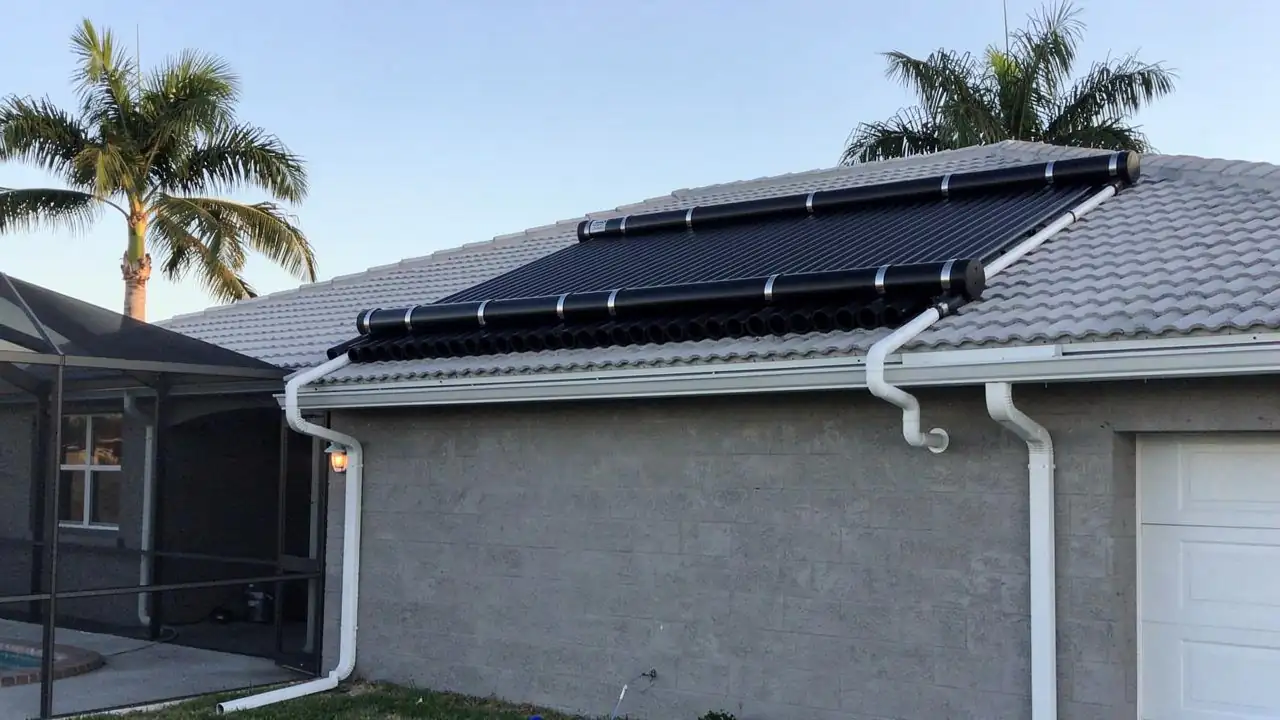
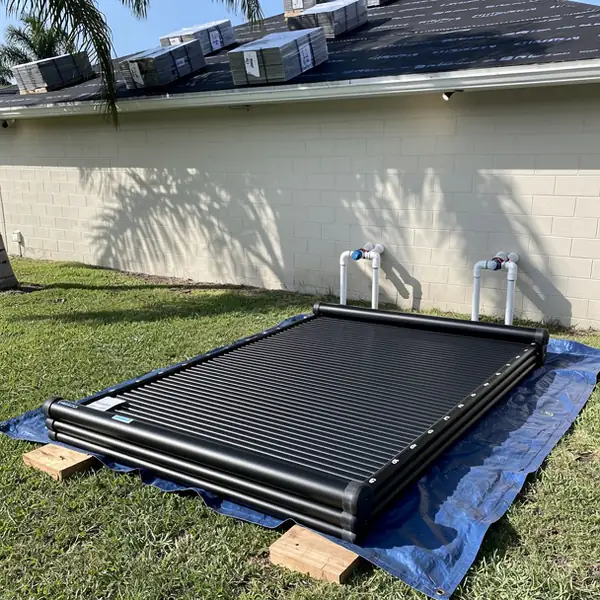
Removed pool solar panels stacked during re-roof

Three paths

Your Options When the Roof Comes Off

Most homeowners reinstall their existing panels, but replacing worn panels or retiring an unused system both make sense when the inspection points that way. You get a written price for each option that applies before the roofer starts.

Remove and Reinstall Your Existing Panels

This is the default when the panels hold pressure and the polypropylene still flexes without cracking. Even on a straight reinstall we replace the parts that age on a roof: straps, fasteners, mount flashings and sealant, rubber couplings and hose clamps, and usually the vacuum relief valve.

Removal takes half a day to a day, and the reinstall takes one day once the new roof passes inspection.

Replace Old Panels While the Roof Is Open

When panels are brittle, leaking in several places or orphaned FAFCO units, new panels cost less now than later because the removal labor is already paid. The Department of Energy's solar pool heater guidance puts collector area at 50 to 100% of pool surface area, so this is also the moment to correct an undersized array.

We install Heliocol and Techno-Solis panels through our solar pool heater installation service, and aging solar water heaters can be upgraded through our solar water heater installation service.

Remove and Cap Off the System Permanently

If you no longer heat the pool, or the system has failed beyond sensible repair, we take it off for good. We cap the solar lines at the equipment pad, remove or bypass the diverter valve and leave the roofer a deck with no solar penetrations to work around.

For a solar water heater, the storage tank can keep running on its electric element as a standard water heater until you replace it.

Process

How Removal and Reinstall Works

Removal and reinstall runs in four stages across two work days, with the roofer's job in between. Here is what happens at each stage and why.

  1. Pre-Removal Inspection and Photos

    We run the system, look for leaks and photograph every panel, strap, mount and valve before touching anything. The dated photos and notes support your manufacturer warranty and any insurance claim, and they settle what was damaged before the roofer arrived.

  2. Draining, Removal and Safe Storage

    Pool panels are drained, numbered and lifted off flat so the headers never take a bending load, which is how brittle panels crack. Solar water heater loops are drained with the glycol captured, and every open roof line is capped against rain and rodents.

    Panels are stored flat on blocks or a tarp in the garage, on the lawn or at our yard, never stacked under heavy materials.

  3. Coordinating Timing With Your Roofer

    We schedule removal for the day before tear-off or the morning of, so the panels are off before the first tile comes up. We keep in touch with your roofer on dry-in (the stage when underlayment seals the deck) and inspection dates, then book the reinstall as soon as the roof passes.

  4. Reinstall, Pressure Test and Final Inspection

    Panels go back with new 316 stainless straps and fasteners into flashed, sealed mounts suited to the new roof. Florida rules (Florida Administrative Code 61G4-15.021) let a solar contractor do the roofing work within 18 inches of a penetration it makes, so the crew setting each mount also seals the roof around it.

    We then pressure test the plumbing, run a full heating cycle, set the controller and meet the inspector for the final when one is required.

Permits

Permits and Roof Inspection Sequence

The roof permit and any solar permit are separate, and the order matters because the panels cannot go back until the roof passes. In Cape Coral both run through the city's EnerGov citizen portal, and a typical job follows this sequence:

  • Your roofer pulls the re-roof permit, and we confirm whether the solar reinstall needs its own permit for your address.
  • We remove the panels and cap the lines before tear-off.
  • The roofer tears off, dries in and passes any in-progress inspections the city requires.
  • The roofer finishes and the new roof passes its final inspection.
  • We reinstall the panels in one day, pressure test and restart the system.
  • If a solar permit was issued, the city's solar final inspection closes it out.

Cape Coral solar permits typically take 1 to 2 weeks to issue, so we apply as soon as the roofer has a start date. Addresses in unincorporated Lee County, including much of North Fort Myers, go through Lee County DCD, and homes in Punta Gorda and Port Charlotte follow the City of Punta Gorda or Charlotte County building offices.

Roof types

Reinstalling on Tile, Shingle and Metal Roofs

The new roof material decides how each mount is flashed and sealed. Many Cape Coral owners change roof type during an insurance re-roof, so we plan the reinstall around the roof going on, not the one that came off.

Concrete Tile

Tile roofs, the norm on 1990s and newer Cape Coral homes, need mounts that reach the deck through flashed bases with sealant under the tile line. We agree with the roofer on which tiles to leave loose at mount locations, which avoids cracked tile and a callback.

Asphalt Shingle

Shingle roofs, common on 1970s and 1980s homes in the southeast Cape, take sealed mounts lapped under the course above. It is the quickest reinstall, and the new shingles let us move a mount a few inches to land on solid decking.

Standing Seam and 5V Metal

On standing seam we can often clamp to the seams without drilling the metal, while 5V crimp roofs take sealed fasteners through the high rib. Metal became much more common in Cape Coral after Ian, and the stainless hardware we use avoids the galvanic corrosion that mismatched metals cause.

On every roof type, mounting is engineered to the design wind speed for your address under the Florida Building Code and ASCE 7, the national wind-load standard. Our hurricane-ready solar heating guide explains how strapping and plumbing choices hold up in storms.

Pricing

Removal and Reinstall Cost

Solar pool panel removal and reinstall in Cape Coral costs $1,400 to $3,200, about $150 to $230 per panel, with new stainless hardware included. Removing and reinstalling a solar water heater costs $950 to $1,900.

Panel count, roof type, how long the panels sit in storage and any parts replaced along the way set the final price. Estimates are free and on site, with a written quote the same day or next.

Typical 2026 installed prices in Cape Coral
ItemPriceWhat moves the price
Pool system removal and reinstall$1,400 to $3,200Panel count, tile versus shingle or metal, roof pitch, two-story access, storage time
Solar water heater removal and reinstall$950 to $1,900One or two collectors, closed loop glycol versus direct system, length of roof lines
Replacement pool panel, installed$450 to $750 per panelPanel size and brand; often worth it for brittle or FAFCO panels
Leak repair found during the pre-removal check$185 to $350 per leakHeader versus riser tube location
Vacuum relief valve$95 to $185Usually replaced at reinstall

Many homeowner policies treat solar detach and reset as part of a covered roof claim, but your adjuster makes that call, not us. We list removal, hardware and reinstall on separate lines so the adjuster can match each one to the claim.

Full system prices for a replacement array are in our solar pool heater cost guide.

Why us

Why Roofers and Homeowners Hand Us the Solar Side

Roofers would rather not take apart solar plumbing, and homeowners want one company accountable for the panels from the day they come off until the pool is warm again. That is the part of the job we own.

Itemized Invoices for Insurance Claims

Your invoice separates removal, storage, replacement parts and reinstall, with the pre-removal photos attached. Adjusters can see exactly what was existing damage and what the re-roof required.

Every Brand, Any Age

We work on Heliocol, FAFCO SunSaver, Aquatherm, iSwim, SunValue, Hi-Tech, Universal, SunStar and SunEarth systems, including ones whose installer is gone. If something fails the pre-removal check, our solar pool heater repair service or solar water heater repair service fixes it before it goes back up.

Schedules Built Around the Roofer

Removal lands before tear-off and reinstall follows the roof final, so the roofer never waits on us. We cover re-roofs from Cape Coral across the river to Fort Myers and down I-75 to Bonita Springs and Estero.

5-Year Warranty on Reinstalls

Our reinstall work and every penetration we seal carry a 5-year warranty. All straps and fasteners are 316 stainless, the grade that holds up to salt air on canal lots.

Licensed and Insured

Florida solar heating work falls under a Certified Solar Contractor (CVC) or Certified Plumbing Contractor (CFC) license. Check any contractor, us included, on the DBPR license verification page before you sign.

FAQ

Removal and Reinstall FAQs

These are the questions homeowners and roofers ask most before booking solar panel removal for a roof replacement.

How long will my panels be off the roof?

Our own work takes about two days: half a day to a day for removal and one day for reinstall. Everything between depends on the roofer's schedule, the weather and the roof inspection, and tile re-roofs usually run longer than shingle or metal.

Who pulls the permit, my roofer or my solar contractor?

Your roofer pulls the roof permit. We check with Cape Coral permitting, or the county or city office for your address, whether the solar reinstall needs its own permit, and we pull it and schedule the solar final when it does.

Does reinstalling affect my panel warranty?

It depends on the manufacturer's terms, which is why we photograph and record serial numbers and condition before removal. Heliocol panels carry a 12-year limited manufacturer warranty, while FAFCO panels no longer have factory support, and our reinstall work carries its own 5-year warranty either way.

Can my roofer just take the panels off?

Some roofers will, but solar plumbing is not their trade, and brittle panels crack easily when they are pried or dragged off. A cracked header turns a $150 to $230 per panel reinstall into a $450 to $750 per panel replacement.

Can I still heat my pool while the panels are off?

Not with solar, but the pump and filter keep running on bypass. If you also have a heat pump, it keeps working as usual, and our pool heat pump repair and installation service can add one if you want backup heat.

Free estimate

Schedule Your Removal and Reinstall

Send us your roofer's start date or expected window, and we will book a free on-site check of your solar panels before tear-off. The earlier we see the system, the more time you have to choose between reinstalling, replacing or retiring it.

  • Written quote for each option the same day or next
  • Dated pre-removal photo report for your warranty and insurance file
  • New 316 stainless hardware and a 5-year reinstall warranty
Based in
Cape Coral, Florida, serving Lee and Charlotte counties
Monday to Saturday
6:00am to 9:00pm
Sunday
9:00am to 9:00pm
Free Estimate