Storm guide for solar owners
Hurricane-Ready Solar Pool Panels and Water Heaters in Southwest Florida
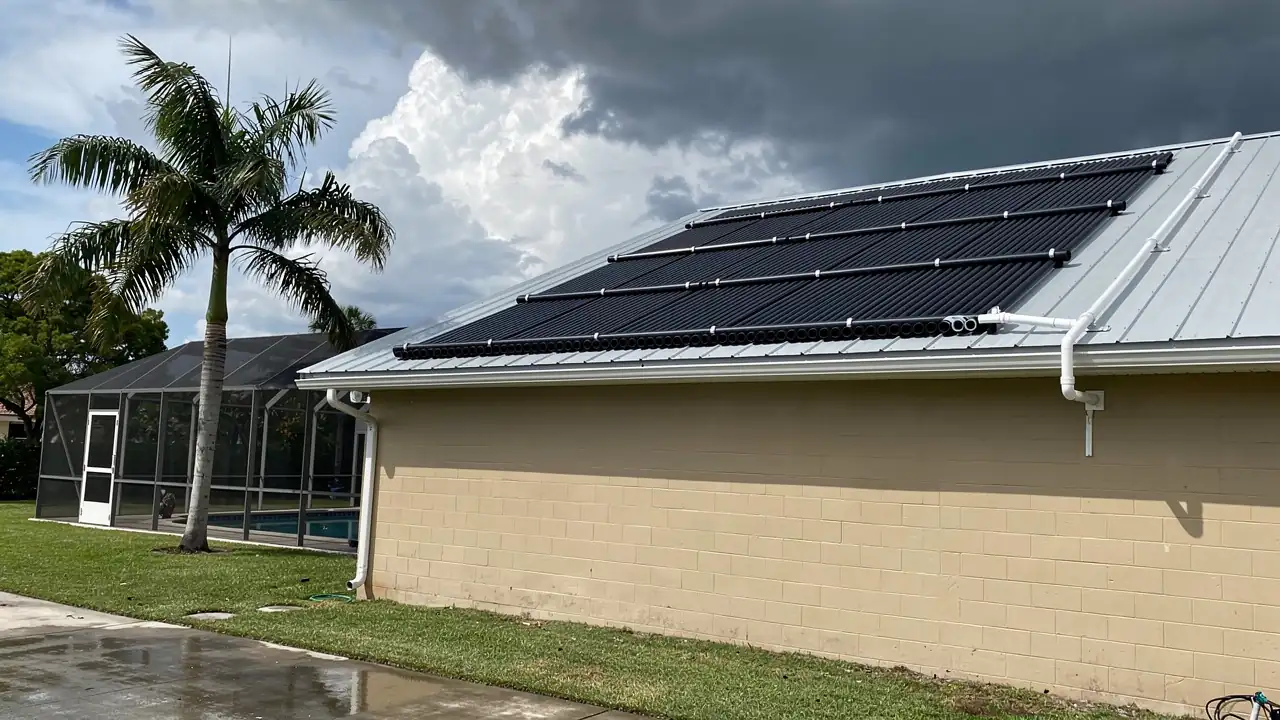
Cape Coral Solar Water Heater Pros installs, inspects and repairs solar pool heaters and solar water heaters on Southwest Florida roofs, and hurricane season shapes every one of those jobs. This guide explains how a properly mounted system handles hurricane winds, what the Florida Building Code asks for in Lee County, and what to do before and after a storm.
We have worked on Cape Coral roofs since 2010, and much of our work since Hurricane Ian has been taking panels off for new roofs and putting them back with fresh stainless hardware. That work shows exactly where storms find weak points: corroded straps, cracked plumbing headers and roof penetrations that were never sealed properly.
The short answer for most owners is simple. Leave well-strapped panels on the roof, shut the system down at ground level, and have it checked before you run it again.
Lessons from 2022
What Hurricane Ian Taught Cape Coral About Roof Equipment
Hurricane Ian showed that roof-mounted solar systems usually fail at their attachments and plumbing, not in the panels themselves. Ian made landfall on Cayo Costa on September 28, 2022 as a Category 4 hurricane and pushed storm surge into Cape Coral and the nearby islands, as the National Hurricane Center's Ian report documents.
Hardware Decides the Outcome
Properly strapped panels rarely leave the roof. The systems that came loose tended to have plated steel hardware rusted by canal salt air, or plastic straps weakened by years of UV.
Plumbing and Controls Take the Hits
Most storm damage turns up around the panels: split headers, cracked supply and return lines, broken vacuum relief valves and torn sensor wires. These are usually repairable without replacing a single collector.
The Roof Underneath Often Goes First
Many Cape Coral homes needed new roofs after Ian even where the solar system came through intact. Those owners needed the panels taken off and put back, which is the work of our solar panel removal and reinstall service.
Attachment types
Mounting Methods Compared: Clamps, Straps and Rails
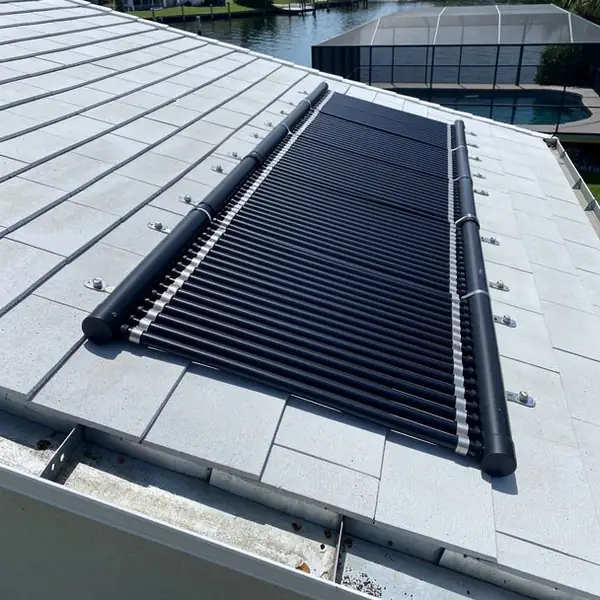
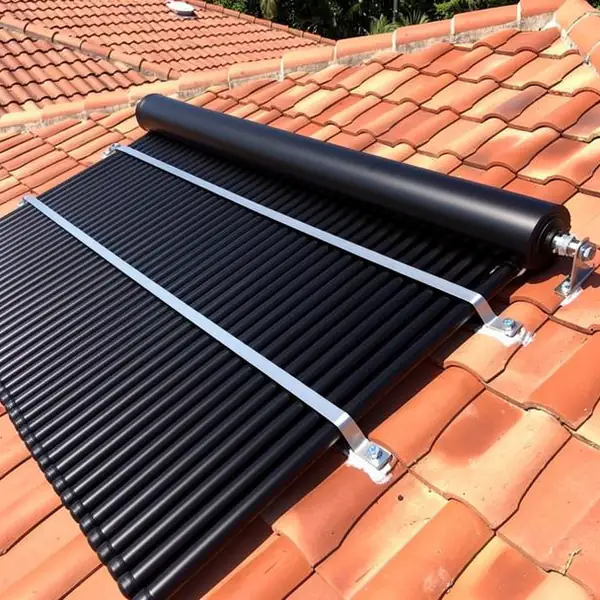
Pool panels are usually held by clamp-based or strap-based hold-downs, while glazed solar water heater collectors sit on rail-mounted frames. Each can meet Florida wind loads when it is designed and fastened correctly, and each fails in its own way when it is not.
| Mounting method | How it holds the collector | How it handles uplift | What to look for |
|---|---|---|---|
| Clamp-based hold-downs | Clamps grip the panel's tubes or headers at several points and fasten to the roof deck | Spreads the load over many anchors and lets the panel expand and contract in summer heat | Missing or cracked clamps, dried sealant at fasteners |
| Strap-based hold-downs | Straps run across the panel face and anchor into the deck or framing at each end and in between | Strong with stainless straps at the designed spacing, weak with plated steel or plastic | Rust streaks, frayed or sun-faded straps, loose end anchors |
| Rail-mounted frames | Aluminum rails bolt to flashed standoffs, and the collector bolts to the rails | A rigid frame suited to heavy glazed flat plate collectors, with loads carried into the rafters or trusses | Loose bolts, corroded standoffs, cracked flashing |
| Rubber mat and hose-clamp systems | Flexible mats joined with hose clamps and metal fittings | Older designs with fewer anchor points and hardware that rusts | Brittle rubber, rust stains on the roof, leaks at clamps |
Roof type changes the attachment, too. On concrete tile we flash each penetration beneath the tile, on shingle we seal fasteners into the deck, on standing seam metal we prefer clamps that grip the seam without drilling, and on 5V metal we fasten through the ribs with sealing washers.
Whatever the method, we use 316 stainless straps and fasteners on salt-air lots and back the roof penetrations we make with a 10-year leak warranty.
Stay or remove
Should Panels Come Down Before a Storm?
No. Properly mounted solar pool panels and solar water heater collectors should stay on the roof, because taking them down in a hurry is more dangerous than leaving them strapped in place.
Here is why pulling panels before a storm causes more problems than it solves:
- Ladder and roof work in pre-storm gusts is how people get hurt
- Panels stacked in a yard or lanai can turn into flying debris
- Removal leaves open roof penetrations unless every one is sealed the same day
- A proper pool system removal and reinstall costs $1,400 to $3,200, money better saved for a re-roof if the storm causes one
The exception is a system that is already loose. If you can see a lifted panel edge or a flapping strap, call us as soon as you notice it, not when a storm is two days out.
A solar maintenance and storm inspection visit before June catches worn straps and tired sealant while there is still time to fix them.
Pre-storm steps
Before a Storm: Shutting Down Your Solar System
Shut the system down at ground level a day or two before the storm arrives, and leave everything on the roof alone. Each step below happens at the pool equipment pad, in the garage or at the breaker panel.
- Photograph the panels from the ground, and from an upstairs window if you have one, so you have dated pictures of their condition before the storm.
- Switch the pool solar controller, such as a Pentair SolarTouch or Hayward GL-235, to off or manual so the diverter valve stops sending water to the roof.
- Close the solar isolation valves at the pool pad if you know which ones they are. If you are not sure, leave them and rely on the controller being off.
- Turn the pool pump off at its breaker if you are evacuating or expect a long power outage.
- For a solar water heater, switch the backup element off at the breaker if you are leaving the house. Closed loop systems carry propylene glycol, so they need nothing more.
- Bring in lanai furniture, planters and anything else in the yard that wind could throw onto the array.
Snowbirds who close up the house from May to October should set the controller to off, or to automatic with a sensible setpoint, before leaving, and book a check for when they return in October or November.
After the storm
Post-Storm Checklist for Solar Owners
After a storm, stay off the roof, look from the ground, and do not run the solar system until it has been checked. Pumping water into a split header or broken line can soak the roof deck and turn one repair into several.
Wait Until It Is Safe
Let the wind drop and the power crews clear lines before you walk the property. Watch for downed wires near the pool equipment pad, and leave the pump off if the pad flooded.
Look From the Ground
Use your phone's zoom or a pair of binoculars to scan the array from the yard and the street.
- Panels shifted, lifted at an edge or missing
- Straps hanging loose or gone
- Cracked glass on a flat plate collector
- Palm fronds or roof tiles lying on the panels
- New water stains on ceilings below the array
Keep the System Off
Leave the controller on off or manual and the isolation valves closed until the plumbing has been checked. If surge water reached a solar tank in the garage, keep its breaker off, because a flooded tank often needs solar storage tank replacement.
Book an Inspection
Our $149 post-storm inspection checks straps, headers, valves, sensors and every roof penetration, then gives you a dated photo report. Repairs are quoted in writing and handled by our solar pool heater repair or solar water heater repair team.
Storm questions
Hurricane and Solar FAQs
These are the storm questions Southwest Florida solar owners ask us most often.
Do solar panels make my roof more likely to fail?
Not when they are mounted correctly and every penetration is sealed. Panels strapped to the design wind load and flashed into the deck add little risk, while loose straps and unsealed holes let wind and water in.
If your roof is near the end of its life, replace it before a new install, or plan a removal and reinstall around the roofer's schedule.
Do I need Miami-Dade approved mounting in Lee County?
No. Miami-Dade approval is required in the High-Velocity Hurricane Zone, which covers only Miami-Dade and Broward counties.
In Lee and Charlotte counties, mounting must meet the statewide Florida Building Code wind loads for your address. Statewide approvals can be checked in the Florida Product Approval search.
Can a hurricane blow solar pool panels off the roof?
It can if the straps or clamps fail, which is why the hardware matters more than the panel. Properly strapped panels rarely leave the roof, but no honest installer can promise a system will survive every hurricane.
Are solar water heater collectors as storm-resistant as pool panels?
Glazed flat plate collectors are heavier than pool panels and sit on rail-mounted frames bolted into the roof structure. They stay on the roof in a storm too, and the tempered glass should be checked for cracks afterwards.
We do not install evacuated tube collectors in Southwest Florida, partly because flat plate panels handle wind and salt air better.
Will I have hot water if a storm knocks out power?
Hot water already in your solar tank stays usable for many hours, but most active systems need grid power to run the circulating pump. A PV-powered DC pump system keeps circulating without grid power, as long as its collectors and piping came through undamaged.
How soon after a storm should I get my system inspected?
Before you run it again, and ideally within the first few weeks while the storm date and your photos are fresh. Florida policies set deadlines for reporting a claim, so check yours with your agent.
Get it checked
Book a Storm Inspection or Pre-Season Check
If a storm has just passed, or you want your straps and roof penetrations checked before the next one, request an inspection and we will show you exactly what we find. Every visit ends with photos and a written quote for anything that needs work.
- $149 post-storm inspection with a dated photo report for your insurer
- $169 annual pool inspection, or $299 for pool and water heater together
- Re-strapping with 316 stainless hardware on salt-air canal lots
- Based in
- Cape Coral, Florida, serving Lee and Charlotte counties
- Monday to Saturday
- 6:00am to 9:00pm
- Sunday
- 9:00am to 9:00pm