Local know-how
Built for Cape Coral Canals, Pool Cages and Salt Air
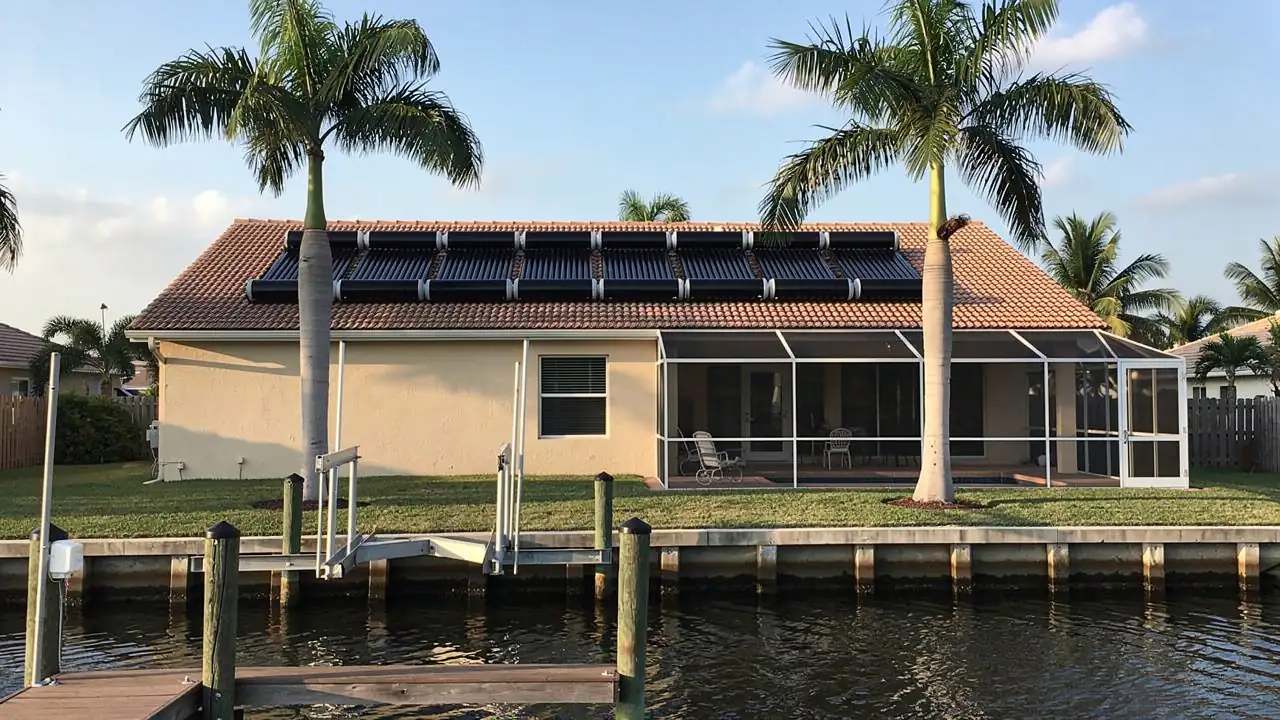
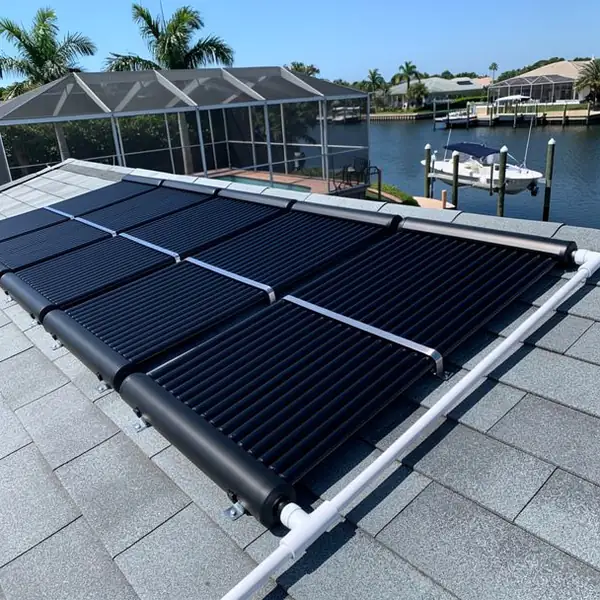
Solar heating in Cape Coral has to be designed around the screened pool cage, the salt air off roughly 400 miles of canals, and the roof the house actually has. We check all three before we write a quote, because each one changes the panel count, the hardware or the install time.
The Pool Cage Shades the Water
A screened enclosure cools the pool and hides part of the sky, so panels always go on the house roof, never on the cage. That screen shade, plus heat loss on clear winter nights, is why we size toward the top of the Department of Energy's 50 to 100% collector guideline.
Salt Air on Southern Canal Lots
Canals in the southern Cape are mostly saltwater with Gulf access through the Caloosahatchee River, and that air corrodes plain steel and zinc hardware within a few seasons. We strap and fasten with 316 stainless on every roof, and rust streaks are the first thing we look for when we take over an older system.
Tile, Shingle and Metal Roofs
Southeast Cape homes from the 1970s and 1980s often still have shingles, most homes built since the 1990s have concrete tile, and standing seam and 5V metal roofs became far more common after Ian. Each needs a different attachment, and tile adds up to a day for lifting and resetting tiles at every mount.
Which Roof Face Points South or West
Cape Coral's canal grid means the best roof face changes from street to street, so we take a compass reading at every estimate. East faces work but need more panels, and Florida's Solar Rights Act lets an HOA steer placement only within 45 degrees of due south, and only if performance does not suffer.
City Water or a Private Well
City utility customers get treated water from the city's reverse osmosis plants, which is easy on solar tanks. Parts of the north Cape still run on private wells until the Utilities Extension Project reaches them, and iron or sulfur in well water shortens tank and element life, so we ask before recommending a solar water heater.